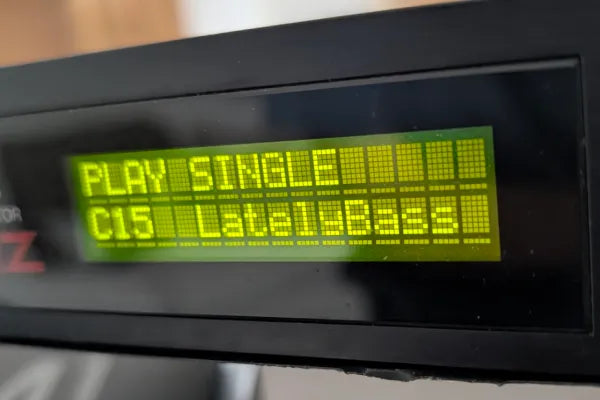
Some sounds are so woven into a genre that producers forget they came from anywhere at all. The Lately Bass is one of those. If you have listened to classic house, garage, or early dance music, you have heard it hundreds of times, that round, woody, slightly hollow bass that sits perfectly under a track and never gets in the way of anything. What almost nobody realises is that it started life as a single factory preset, number fifteen, on a relatively cheap Yamaha FM synth.
After years of sampling old hardware, the TX81Z taught me something worth passing on: the most useful bass sound in dance music was never the most expensive or the most complex. It was the one that solved a problem, and got used so much it became part of the furniture.
What FM bass does that other bass does not
Most of the bass sounds producers reach for are subtractive: an analogue-style oscillator with a filter pulled down over it. They are warm and they are big, and on a club system they can also turn into an undefined low rumble that fights the kick and muddies everything above it.
FM bass behaves differently. Frequency modulation generates a complex set of harmonics that give a bass real definition in the mids, not just weight in the lows. That is the secret of the Lately Bass. It has body underneath, but it also has a woody, slightly metallic character higher up that lets your ear actually track the notes. On a small speaker or a phone, where the deep sub barely exists, that mid-range character is the difference between a bassline you can follow and a bassline that disappears.
That is why it cuts through. It is not louder. It just occupies a part of the spectrum that survives every playback system, from a club rig to a pair of earbuds.
Cheap, everywhere, and exactly the point
There is a pattern in dance music that keeps repeating, and the TX81Z is a perfect example of it. The gear that shaped the sound was usually the affordable gear, the machines ordinary producers could actually get hold of. The same story sits behind the Roland Juno-106: cheap, accessible, used by everyone, and familiar precisely because of that.
The Lately Bass was a preset. People did not even program it. They scrolled to it and played, and it ended up holding down the bottom of record after record. That ubiquity is not a knock on it, it is the source of its power. When a listener hears that bass, they are hearing every track that ever used it, whether they could name the synth or not.
Why a multi-sample, not a model
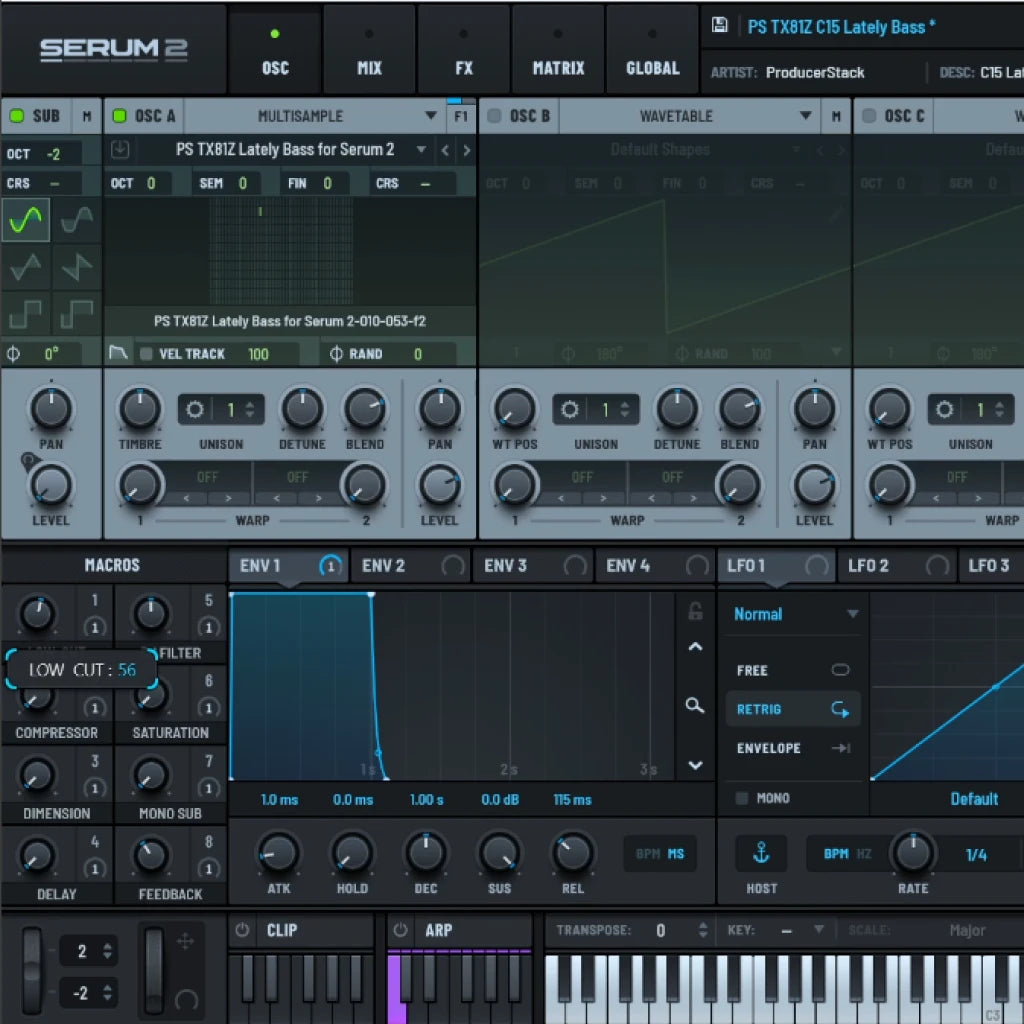
We captured the Lately Bass as a multi-sample for Serum 2 rather than trying to model the FM engine, and there is a reason for that. FM synthesis is notoriously hard to recreate convincingly, and what you actually want is not a maths-accurate emulation, it is the exact sound, with all its real character intact. Sampling the hardware across its range gets you that: the genuine article, playable in a synth you already know. The thinking behind that approach is laid out in the piece on why multi-sampling matters.
Using it in a track
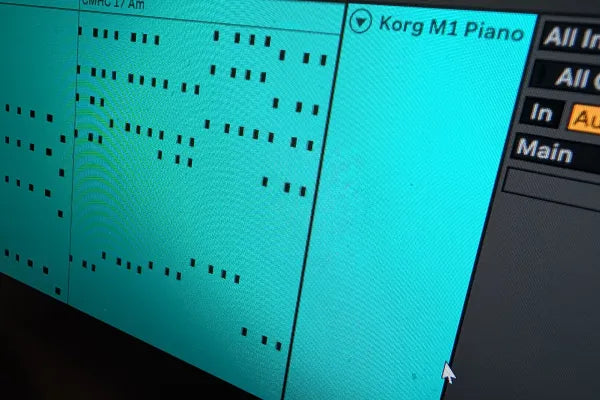
Keep it simple. The Lately Bass works because it does not try to do too much. Write a part that locks tightly with your kick, leave space on the downbeats for the two to breathe together, and resist the urge to layer a second sub underneath it. The whole appeal of this sound is that it covers the low and the low-mid on its own.
And let the mid-range character sit forward. Do not roll all the brightness off it in the name of a clean low end. That woody edge is the sound, and it is what keeps the bassline present when everything else is going on around it.
Where the pack fits
TX81Z Lately Bass is the classic FM bass of house, multi-sampled from the hardware for Serum 2, with the woody mid-range character that makes it cut through any system kept intact. It is a foundational sound, not a feature, the kind of bass you build a track on top of rather than show off.