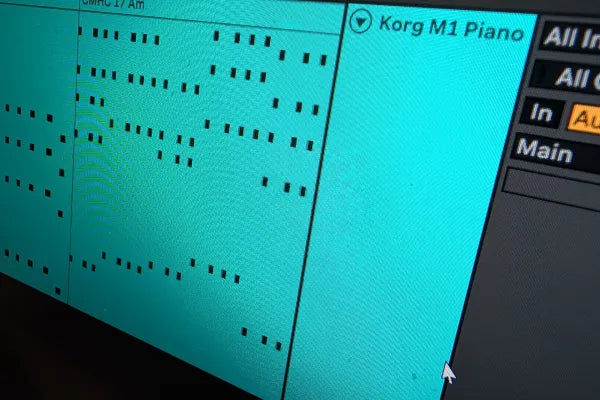
There is a particular kind of stuck that almost every house producer hits. The drums are going, the bassline is solid, the energy is there, and then you open the piano roll to write the chords and your hands hover over nothing. You know what it should feel like. You can hear it. You just do not know which notes make that feeling, and twenty minutes later you are still nudging a single voicing around hoping it resolves into something that sounds like a record.
I want to make the case for the least glamorous product we sell, the chord and MIDI pack, because it solves exactly that problem, and the reason it works tells you something true about how house music is actually written.
House does not run on music theory
Here is the thing nobody says clearly enough. The chords that define house music are a small, familiar set. The same handful of voicings, the same suspended and minor-seventh shapes, the same movements turn up across thousands of records because they are the ones that sound right in this music. You do not need to understand why a minor ninth works under a four-to-the-floor groove. You need to be able to drop it in and keep moving.
That is the whole argument for a chord pack. It is not a shortcut around skill, it is a shortcut around the blank page. The producers who made the records you love were not, for the most part, sitting there working out voice-leading from first principles. They knew the shapes that worked, often by ear, often by having heard them a thousand times, and they used them. A MIDI chord pack just hands you those same shapes directly.
Why MIDI, and why these specifically
When the chords come as MIDI rather than audio, you keep all the control. Drag the pattern in, and it is yours to change: swap the sound, move it to a different key, re-voice it, thin it out, stack it up. You are not stuck with someone else's piano tone. You are getting the harmonic decision, the part that was hard, and keeping every production decision for yourself.

And these are the Korg M1 chords, which matters because the M1 piano and organ are not just any house sound. They are the house sound, the bright, percussive stabs that built an entire era. So you are getting two things at once: the voicings that work, and the texture that already carries the cultural weight of the music. If you want the full story of why that M1 sound is so loaded, the piece on the M1 piano that built house music goes deep on it.
How to actually use a chord pack well
The mistake is to treat the pack as a finished part. The skill is in what you do with it.
Drop a progression in, then strip it back. Often the most powerful house chords are not the full six-note stack, they are two or three notes with all the air around them. Mute notes until the voicing is doing the least it can while still feeling right.
Then move it. Take the same shape and walk it up or down, or shift one note inside the chord across the bar. The pack gives you the starting harmony, but the movement is where the track comes alive, and that part is easy once the right notes are already in front of you.
And re-voice for register. The same chord played low under a bassline does a different job than the same chord stabbed high over the top. Because it is MIDI, you can try both in seconds.
Where the pack fits
Korg M1 House Chords is a MIDI and sample pack of the classic house piano and organ voicings, the shapes that sound right in this music, captured from the machine that defined them. It will not teach you theory, and it does not need to. It gets the right notes under your hands so you can get on with the part of writing house that is actually fun.