Saturation has an image problem. It gets sold as warmth, glue, vintage character, the analogue feeling, all the words that make it sound like a finishing touch you sprinkle on at the end if you are going for a vibe. That is one thing it does. It is not the most useful thing it does, and leaning on the "character" framing alone means most producers never get the real value out of it.
After three decades of mixing electronic music, here is how I actually think about saturation: it is one of the best tools you have for getting a track loud and making the rest of your chain work properly. Not warmth. Loudness and clarity. The character is a bonus that comes along for the ride.
How saturation gets you loud
Two things happen when you saturate a signal, and both of them help with loudness.
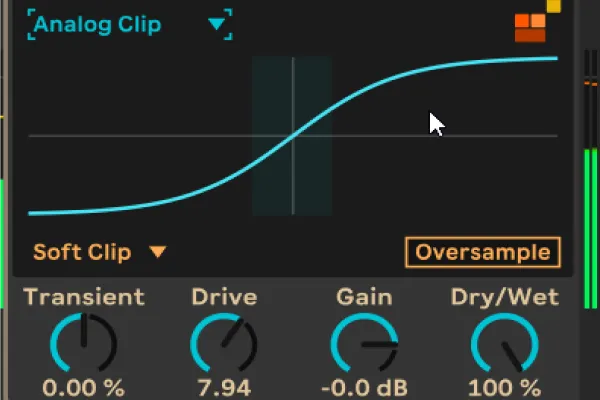
The first is that saturation rounds off harsh peaks. Those sharp, spiky transients that sit ten or more dB above the rest of a sound do not make it feel louder, they just eat your headroom and send your compressors, limiters and meters into a panic, working hard against peaks your ear barely hears. Saturation shaves the worst of them. The moment those spikes are gone, every dynamics processor after it relaxes, and the loudness you were chasing has somewhere to go.
The second is that saturation adds harmonics that were not there before. It generates new frequency content, both even and odd order harmonics, related to the original sound. Those added harmonics give a sound presence and edge, and crucially they pull it forward in the mix. A part that was sitting back, dull and buried, steps toward the listener without you reaching for the volume fader at all. That is the part people miss. Saturation can make something feel louder and closer by adding to it, not by turning it up.
Put those together and you get something that sounds like a contradiction but is the most accurate way I can describe it. Saturation is a track cleaner that works by making things dirty. You add a controlled amount of grit, the harsh peaks come off, the harmonics fill the sound in, and suddenly the rest of your chain starts working the way it was supposed to. The mix sounds cleaner because you made it slightly dirtier in the right place.
Why this beats reaching for a compressor
The instinct, when a sound is not cutting through, is to compress it. Compression has its place, but it solves this particular problem badly. A compressor reacts to those hard transients by pulling the whole sound down for a moment, which flattens the life out of it and still leaves you fighting for level. You are punishing the entire signal to deal with a few milliseconds of spike.
Saturation deals with the spike itself. It shaves the peak and replaces the lost energy with harmonic content that actually helps the sound carry. You end up with something more forward and more controlled, without the squashing. For a lot of dance-music material, that is simply the better first move.
The transient designer is the part people overlook
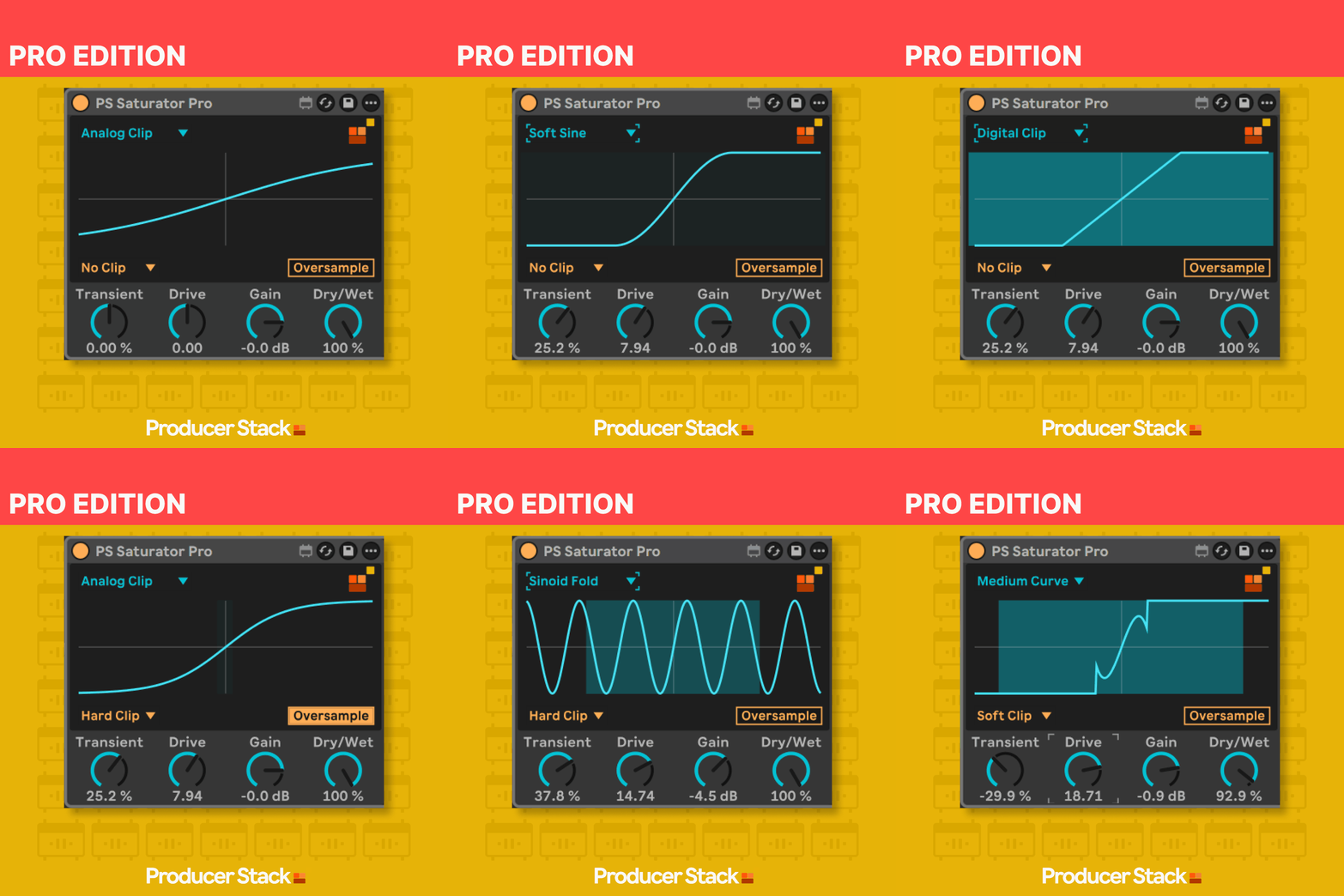
The thing that makes Saturator Pro more than a saturation curve is that it has a transient designer built into it. That matters, because saturation and transient shaping are two halves of the same job. The saturation controls the harmonic content and the tone. The transient designer controls the attack and the punch. Having both in one device means you can shave a harsh peak with saturation and then put the punch back exactly where you want it, instead of saturating a sound into submission and losing its impact.
On drums especially this is the difference between a kick that is loud and a kick that is loud and still hits. You take the harsh top off, fill it in with harmonics so it carries through a system, and use the transient control to keep the front of the hit snapping. One device, two controls, the whole job.
A note of caution, because it is everywhere at the moment. There is a lot of talk online about saturation as a "preamp" sound, the colour of a classic console channel. That is real, and you can absolutely use Saturator Pro that way to a degree. But do not let the preamp-worship distract you from the practical job. The reason to reach for this is to get a sound loud, clear and forward. The console character is a flavour, not the point.
How to use it
Start with a single sound that is annoying you, usually a harsh lead or a kick. Add a modest amount of saturation and listen for the harsh edge softening while the body of the sound fills out. Push it until it is clearly too much, then back off to where it is just helping. That over-and-back is the fastest way to find the sweet spot.
Then use the transient designer to restore any punch the saturation softened. You are aiming for a sound that is louder and more present than when you started, but has not lost its attack. Once you have heard a part go from buried to forward without touching its fader, you will start using saturation as a level and clarity tool, not a character one.
Where the device fits
Saturator Pro is a low-overhead saturation device for Ableton Live with multiple algorithms and a transient designer built in, made to get sounds loud, clear and forward rather than just warm. It sits inside a bigger subject worth understanding, which is how loudness in electronic music actually works. If you want the full picture of why your tracks deflate next to commercial releases, the loudness post is the place to start, and this device is one of the tools that closes the gap.