Every electronic music producer eventually runs into the same wall. You've put time into your track, the mix sounds right in the studio, and then you play it back-to-back with a professional release and something deflates. It doesn't press. It doesn't push. That gap is almost always loudness, but not peak level, which is a different conversation entirely. It's perceived loudness over time, and understanding that distinction is where the whole subject starts to make sense.
In UK club culture specifically, this has always been a physical thing. The pressure at the right frequency, at the right level, on a system that's built to move air, that's what changes a room. After three decades in electronic music, from the early house days through to today's streaming landscape, I've watched the conversation about loudness shift completely. The loudness wars aren't over. They've just moved somewhere new.
The Loudness Wars in Electronic Music: What Actually Changed
Everyone bangs on about the "loudness wars being over" because of streaming normalisation. Complete nonsense, if I'm being honest. The loudness wars aren't over – they've just moved to a different battlefield.
Here's the thing: back in the vinyl days, you were physically limited by the technology. The needle would literally jump out of the groove if you pushed too hard. That limitation kept everyone roughly on the same playing field.
Then CDs came along, and suddenly there was no needle to worry about. Just a laser reading digital data.
So what happened? People started making their records louder. And you know what? People seemed to like it.
That's the main takeaway from all this – listeners respond to louder recordings. They always have, and they always will.
Understanding Modern Loudness: It's Not About Peak Levels
The critical thing to understand is that we're not talking about the loudest point in your track. It's not about that moment when your drop hits zero dB. We're talking about perceived loudness over time.
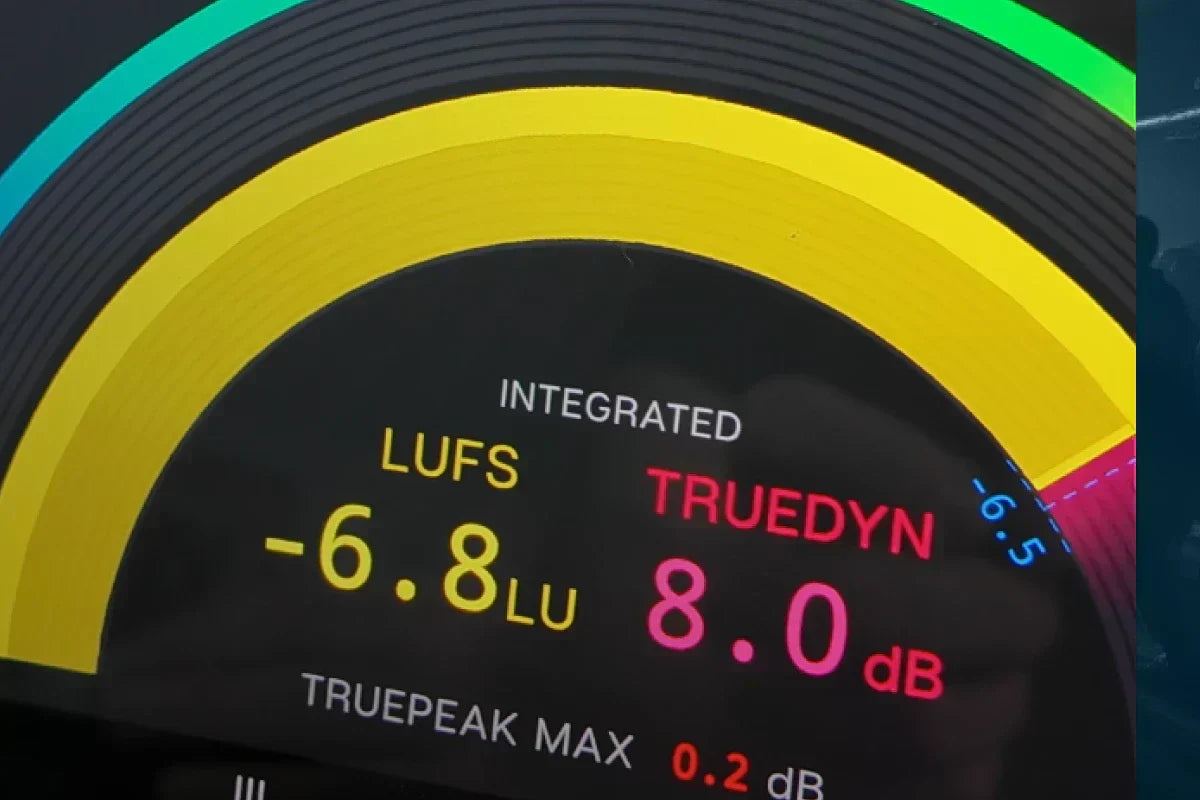
This gets into some proper psychoacoustic territory, but the basic principle is simple: your ear doesn't just measure the electrical peaks. It measures how loud something feels over the duration of the track. That's where LUFS measurements come in – they show you how humans actually hear loudness.
Peak vs LUFS: The Key Difference
- Peak level is the loudest point in your recording
- LUFS (Loudness Units Full Scale) is an average loudness over the time span of your track – and this is what streaming platforms actually care about
LUFS Targets: What Spotify, Apple Music and Club DJs Actually Want
Now, here's where it gets interesting. Spotify normalizes everything to around -14 LUFS. Apple Music does something similar. YouTube follows suit. The theory goes that if everyone's mastering to -14 LUFS, the loudness wars are over, right?
Wrong.
What actually happened is that dance music producers looked at -14 LUFS and said, "That's not loud enough for the dance floor." And they were absolutely right. DJs want loud tracks. Clubs demand impact. The dance floor needs to feel that pressure.
So the industry basically said: screw the streaming platforms, we're going to make it as loud as we can without ruining the track or even ruin it, who cares? And then the platforms can do what they want with it.
Why This Approach Actually Works
Here's the clever bit – when streaming platforms normalize your track down, they don't actually change your mix. They just turn the volume down. It's still your exact mix, just quieter.
But if you've pushed your track to, say, -6 LUFS in mastering, and introduced some controlled saturation, clipping and compression to get there, that character stays in the quieter version. So you get the best of both worlds: a track that hits hard in the club and still sounds characterful when streamed.
The Bass Problem (And How to Solve It)
If you're making house, tech house, or any bass-heavy electronic music, you've got a specific challenge. Bass hits those limiters really hard, and it's easy to introduce unwanted distortion when you're pushing for loudness.
The secret is building loudness from the ground up. It's not something you slap on at the end with a maximizer plugin. You need to be thinking about it from the moment you start arranging your track.
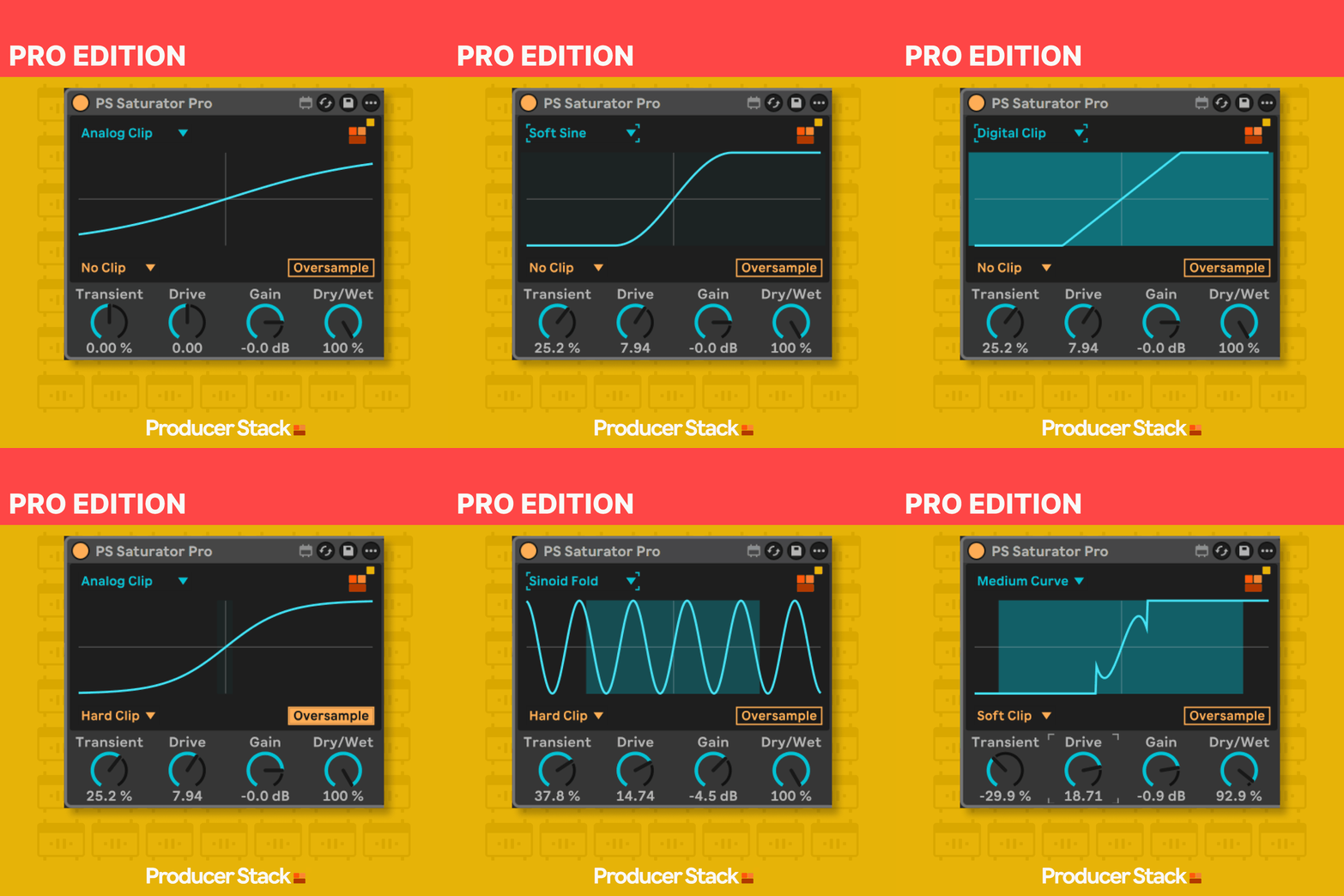
Managing bass dynamics before they hit your limiter makes all the difference. This is where transient shaping becomes essential – controlling the attack of your bass elements means they don't trigger excessive limiting on every hit. Tools like our Saturator Pro M4L combine transient control with saturation in one device, letting you tighten bass transients whilst adding harmonic content that helps the fundamental frequency cut through without eating up all your headroom. The key is addressing dynamics at the source rather than trying to fix everything at the mastering stage.
The Common Mistake
Here's where most people go wrong: they try to solve loudness problems with more limiting. That's backwards thinking. The arrangement and mix need to support loudness, not fight against it.
EDM Mastering in Practice: Real-World Targets
Let me give you some actual numbers from the real world:
- Club-focused EDM: -6 to -8 LUFS integrated
- Streaming-focused: -10 to -12 LUFS integrated
- Radio/Commercial: -8 to -10 LUFS integrated
The Richie Hawtin releases I've analysed hover around -10 LUFS. Some of the harder-hitting commercial stuff pushes -6 LUFS. Deadmau5's "Strobe" sits at a surprisingly conservative -12 LUFS – but it still sounds massive because the arrangement supports it.
Genre Matters More Than Numbers
This is crucial: certain genres should be loud. Dance music, heavy rock, drum and bass – they deserve to hit hard. Classical music? Not so much. Singer-songwriter ballads? Definitely not.
Loud is appropriate at certain points. If you've got a dance floor full of people and the track next to yours is 3dB louder, guess which one's going to get the crowd moving?
Mastering Loudness in Ableton Live: The Tools That Work
You don't need expensive mastering plugins to get competitive loudness. In Ableton Live, you've got everything you need with the native tools:
- Compressor: For controlling dynamics and adding punch
- Limiter: For final level control without clipping
- Multiband Dynamics: For frequency-specific control
- EQ Eight: For surgical frequency adjustments that support loudness
- Saturator: For adding harmonic character and controlled clipping
The key is using these tools in stages, not trying to do everything with one plugin. A little compression here, some EQ there, and finally a limiter to catch the peaks.
For more focused control over transients and saturation together, devices like Saturator Pro M4L streamline the workflow by combining both processes in a single interface. This approach is particularly useful on bass-heavy material where you need to shape dynamics and add character without bouncing between multiple plugins. Whether you use native tools or integrated devices, the principle remains the same: build loudness through multiple subtle stages rather than one aggressive process.
Why "Streaming-Safe" Mastering Loses on the Dance Floor
People love to tell you what's "correct" in mastering. Complete gatekeeping nonsense. Some of the most influential electronic music came from people doing things "wrong."
The Kinks literally ripped holes in their speakers with a razor blade to get the sound they wanted. That's not technically correct, but it worked. Think about punk, drum and bass, dub reggae – loads of rule-breaking all over the place.
If it sounds good and serves the music, it's right. End of story.
The Bottom Line: Make It for the Club
If you're making electronic dance music, mix it for the club environment. That's where it's going to matter most. The streaming platforms will normalize it anyway, but they're just making your mix quieter – they're not changing the character or the impact.
A properly loud master that's been crafted with care will sound better than a "streaming-safe" mix that's been turned up by an algorithm. Your dynamics, your compression, your limiting choices – that all stays intact.
Practical Steps to Get There
- Start with your arrangement - If your track isn't arranged to be loud, no amount of mastering will fix it
- Monitor with LUFS meters - But don't become a slave to the numbers
- Reference against commercial tracks - Find tracks that hit as hard as you want yours to
- Trust your ears over meters - The numbers are guidance, not gospel
Loudness in Electronic Dance Music: What to Take Away
The listeners decide what works. If they're streaming the louder tracks more, responding better to the punchier mixes, dancing harder to the tracks that hit – then that's your answer right there.
Loudness isn't everything, but in electronic dance music, it's absolutely essential. Don't let anyone tell you the loudness wars are over. They've just evolved.
Make it loud. Make it right. Make it dance.