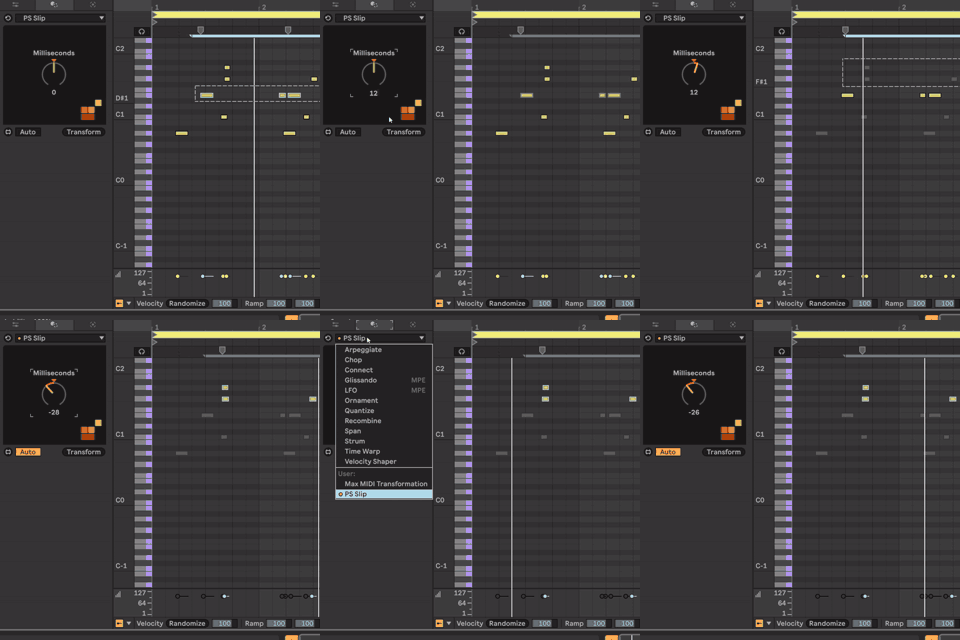
You program a beat, quantise it so everything is dead on the grid, and it sounds tight. It also sounds, somehow, lifeless. Next to a record that feels alive, your perfectly quantised version is a little stiff, a little robotic, and you cannot quite work out why, because technically it is more accurate than the thing you are comparing it to. That is exactly the problem. It is too accurate.
After enough time making this music, you learn that feel does not live on the grid. It lives in the tiny deviations from it, the few milliseconds early or late that a human player naturally introduces and a quantise button strips out. Slip exists to put those milliseconds back.
Why perfect timing feels wrong
When a real drummer or a real bass player performs, no two hits land in exactly the same place relative to the beat. The snare sits a hair behind. The hats push slightly ahead. The bass locks a touch late against the kick. None of this is sloppiness, it is feel, and your ear reads those micro-timing relationships as life, as groove, as a human being in the room.
Hard quantise erases all of it. Every note snaps to the same mathematical division, and the result is rhythmically correct and emotionally flat. The information your ear uses to feel a groove, the small timing offsets between elements, has been deleted. This is the single most common reason a programmed beat sounds programmed.
What nudging milliseconds actually does
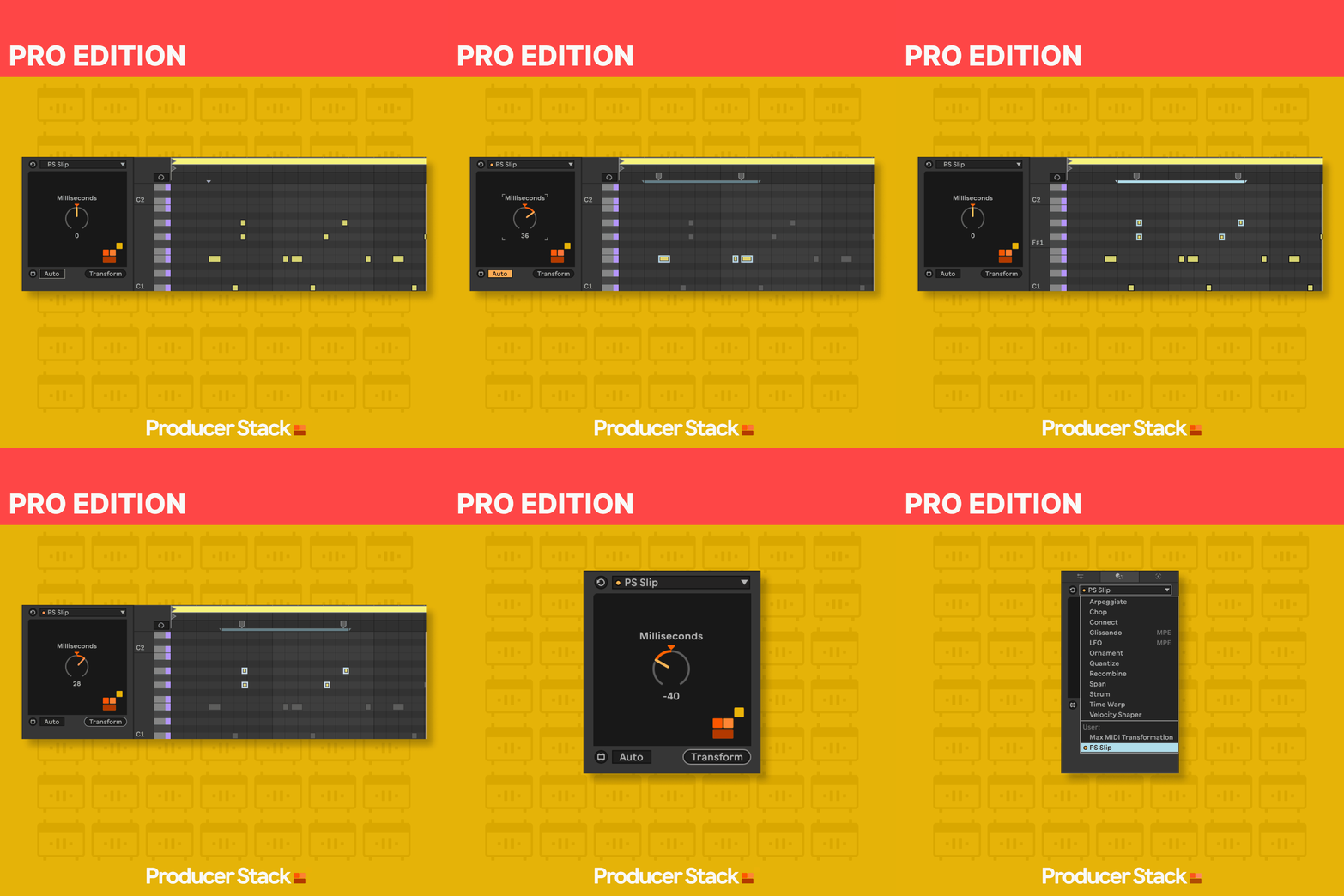
Slip lets you move MIDI notes by milliseconds, which is the precise scale that feel operates on. We are not talking about shifting things by a sixteenth, that is a rhythmic change you can hear as a change. We are talking about the sub-perceptual scale, the few milliseconds that you do not consciously hear as "late" but absolutely feel as groove.
Push a snare a handful of milliseconds behind the beat and it drags slightly, in the good way, the way that makes a beat feel relaxed and heavy. Pull the hats a touch ahead and they drive the groove forward. Offset the bass against the kick and the low end starts to breathe instead of sitting in one rigid lump. Each move is tiny. The cumulative effect is the difference between a beat that ticks and a beat that pockets.
The key is that you are doing this deliberately and with control, on the timescale where it counts. You quantise to get everything locked, then you slip individual elements off the grid by the small amounts that reintroduce the human relationships hard quantise took away.
How to use it without overdoing it
Start small and trust your body, not your eyes. Add a few milliseconds of lateness to your snare or clap and play the loop. If your head nods a little more, you are going the right way. The amounts that work are smaller than you expect, and the temptation is always to push too far until the timing genuinely sounds loose. Back off until it just feels good.
Treat elements in relationships, not in isolation. Groove is about how parts sit against each other, so think "snare behind the kick" or "hats ahead of the snare" rather than nudging things at random. And leave your anchor, usually the kick, on the grid, so everything else has something steady to lean against.
Where the device fits
Slip is a Max for Live device for Ableton Live that nudges MIDI notes by milliseconds, so you can put the human micro-timing back into a beat that quantise made too perfect. It works on the scale feel actually lives on, the few milliseconds between a programmed groove and a played one.