Put a standard delay on a sound in a swung track and listen closely to the repeats. Something is slightly off. The original hit sits in the pocket, with that human, behind-the-beat lean that makes the groove move, and then the delay throws its repeats onto a rigid, perfectly even grid. The two do not agree. The repeats feel mechanical against a part that was meant to breathe, and the whole thing stiffens up.
Most producers feel this without being able to name it. They turn the delay down, or off, and assume the effect just was not working. Often the delay was fine. The problem is that it could not swing, and in dance music that matters more than people give it credit for.
Groove is not on the grid
Here is the thing about the music we make. The grid is a starting point, not the destination. Swing, that subtle pushing and pulling of notes off the strict grid, is a huge part of what makes house, garage, and a lot of electronic music actually groove. It is the difference between a beat that marches and a beat that dances. UK garage in particular lives and dies on it.
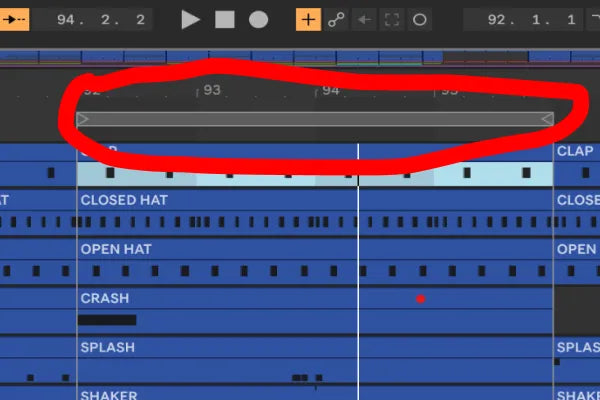
When you apply swing to your drums and your parts, you are deliberately moving things off the rigid divisions to create feel. So the moment you add a straight delay, you have introduced an element that ignores all of that. The delay is playing to the metronome while everything else is playing to the groove. No wonder it sounds like it is fighting.
What a delay that swings does
The fix is simple to describe: the delay needs to put its repeats where the groove is, not where the grid is. A delay that swings places its echoes in time with the swung feel of your track, so the repeats fall into the same pocket as the original. Instead of fighting the groove, they reinforce it.
That sounds like a small thing and it is a large thing. Suddenly a delayed vocal chop, a stab, a percussion hit, all of it grooves with the track instead of against it. The repeats become part of the rhythm rather than a metronomic afterthought sitting on top of it. You can lean on delays much harder, use them as rhythmic elements in their own right, because they are now locked to the feel rather than undermining it.
And the why underneath all of this is the simplest reason in the world. Swing is part of dancing. Music that swings is easier to move to, it pulls the body in a way that perfectly straight music does not. Keeping every element, including your effects, in that swung pocket is keeping the whole track danceable.
Where to use it
Reach for it anywhere a delay is a rhythmic part rather than a wash. Vocal chops and one-shots are the obvious place: a swung delay turns a single chop into a rolling, grooving phrase that sits right in the beat. Percussion and stabs are the next. A delayed clap or rim that lands in the pocket adds movement without adding clutter.
Match the delay's swing to the swing on your drums and let the repeats fall in alongside the groove rather than across it. Once you hear repeats that lock to the feel, straight delays on a swung track start to sound obviously wrong.
Where the device fits
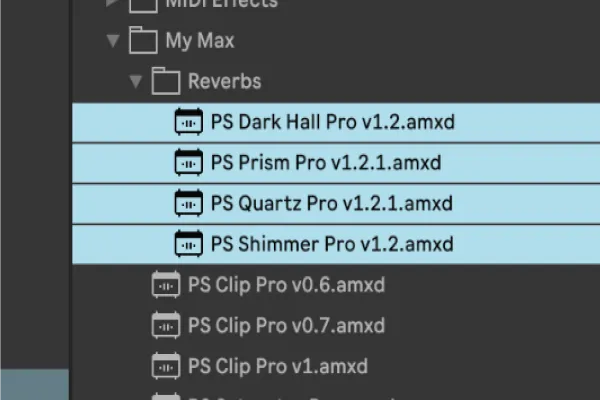
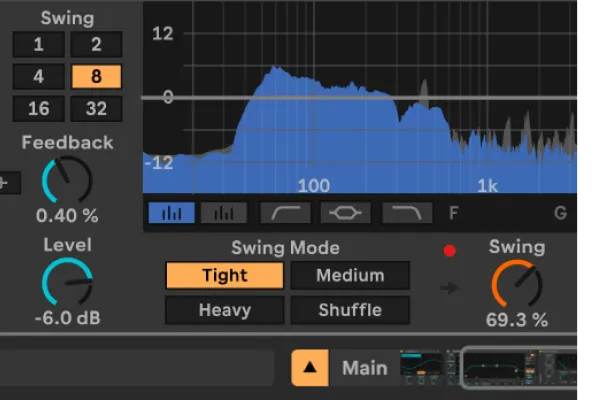
Swing Delay is a Max for Live delay for Ableton Live that swings its repeats in time with your groove, so your echoes dance with the track instead of fighting it. Not every delay can do that, and in music built on swing, that one difference is the whole point.