You're four bars into a breakdown and something's not quite right. The pads are doing their thing, bass is rolling along nicely, but there's no... punctuation, you know what I mean? Nothing that makes people's heads snap up. You need something with instant attack that says what it needs to say and then gets out of the way. You need a stab.
I spent most of the early nineties making exactly this kind of music, and stabs were absolutely everywhere. Not background sounds or texture, they were architectural. They created tension, marked your transitions, delivered that little kick of dopamine that kept dancers locked in.
Thirty-odd years later, they're still solving the same production challenges. Understanding how they work isn't about recreating vintage sounds for nostalgia's sake; it's about understanding why certain approaches just keep working.
What Actually Is a Stab?
Right, simple version: a stab is a short, sharp sound, usually a chord or single note with really quick attack and relatively short decay. Think of it as a musical exclamation mark. The key thing is brevity plus harmonic content happening together.
A kick drum hits hard but tells you nothing about pitch. A sustained pad gives you harmony but no percussive impact. A stab gives you both in one concentrated hit. That's the magic of it.
The term comes from orchestral and jazz music, where brass or string sections would deliver short, accented notes, literal "stabs" that punctuated arrangements. When we started building electronic tracks in the late eighties, we sampled these orchestral hits and nicked them for our own purposes, but the principle stayed exactly the same: dramatic punctuation with both rhythm and harmony doing their job.
Hits are basically the same thing but usually shorter and often less obviously pitched. The distinction gets properly murky, ask ten producers to define the difference and you'll get eleven opinions, but generally hits lean more percussive while stabs keep more obvious pitch information. In practice, everyone uses the terms interchangeably anyway, which tells you what you need to know: what matters isn't the label, it's what the bloody thing does.
How UK Rave Made Stabs Essential (And Why We Didn't Really Think About It)
House music producers in Detroit and Chicago were already using string and piano stabs for melodies, tracks like Rhythim Is Rhythim's "Strings of Life" in '87 and Inner City's "Good Life" in '88 showed how a well-placed stab could carry an entire track's harmonic movement. These weren't background sounds; they were often the main event.
By 1990-91, Belgian producers made everything harder. Quadrophonia, Frank De Wulf's "Cubes" under the Modular Expansion alias, Spectrum's "Brazil"—these tracks used more aggressive, synthetic stabs that formed the entire basis of the compositions. Proper weapons, designed for warehouse systems that could take serious punishment.
UK producers absorbed both approaches and added our own twist. When breakbeat hardcore emerged around '91, stabs became essential for marking those crucial moments when a track shifted—the build before the drop, the transition into a new section, the punctuation between breakbeat patterns. Organ stabs, string hits, brass jabs, synthesised chord blasts, that became the vocabulary of UK rave.
The Korg M1 was absolutely everywhere for those stabby organ sounds. I mean, everywhere. Every rave track from '91 to '93 seemed to have one. The Roland Juno and Alpha Juno series gave us everything from warm pad stabs to that infamous "hoover" sound. And ROM boxes like the E-mu Proteus series meant you could get instant access to curated stab sounds without needing to own entire keyboards.
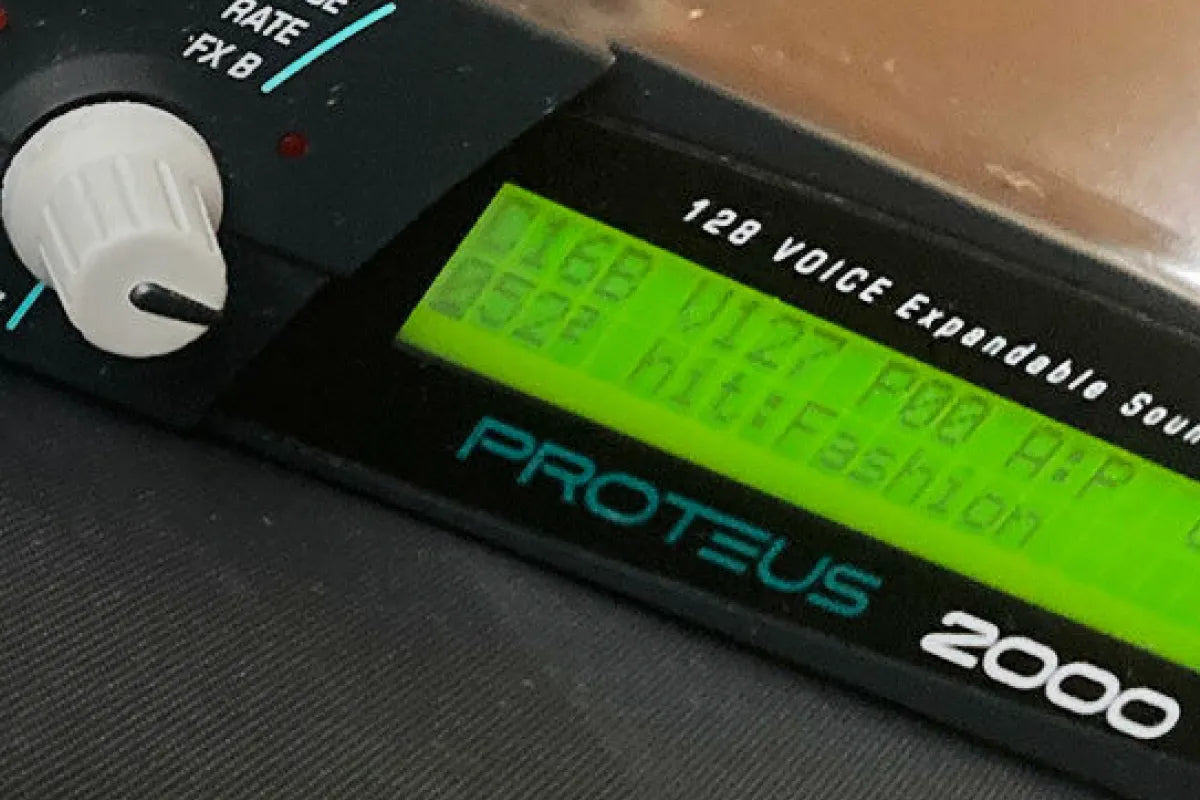
When you've got limited sampler memory and you need maximum impact, a well-chosen stab from something like a Proteus 2000 gave you instant ammunition. Simple as that.
Why Stabs Work (Or: Stop Overthinking It)
Here's the thing, and I've said this before, a lot of this stuff just happened. You'd play through sounds going "that sounds mint, don't know why," and you'd use it. All the theoretical sophistication about tension and release and dopamine hits? That gets added retroactively.
You weren't breaking rules if you didn't know them in the first place. You just did what sounded good. Will they dance? Are they gonna dance to that? That's what mattered.
But if you do examine what's happening, and I suppose we should since we're writing about it, patterns emerge. Stabs create tension and release without requiring complex arrangement skills. They mark time in ways that pure rhythm can't. When a stab lands perfectly on a downbeat after four bars of build, that feeling isn't accidental. It's fundamental to how humans process rhythm and anticipation.
Stabs also solve a practical problem in dense electronic arrangements: how do you add harmonic content without eating up all your frequency space? A sustained chord sits there occupying the mix continuously. A stab delivers its information and then disappears, leaving room for everything else.
That's efficient production by necessity. When you're working with limited tracks, limited memory, and a warehouse full of people who need constant stimulation, efficiency actually matters.
The E-mu Proteus 2000 Hardware Behind Classic Rave Stabs
Early nineties, access to sounds was constrained in ways that are hard to imagine now. You couldn't download gigabytes of samples. Sample CDs existed but you needed expensive CD-ROM drives. Sharing sounds meant physically copying floppy disks. remember, we're talking three and a half meg or whatever it was, or recording everything out to DAT and then sampling it back in. Properly involved process.
ROM-based synths and modules like the E-mu Proteus 2000 basically functioned as the sample packs of the day. The Proteus 2000 came out in '99, so a bit later in the timeline, but it represented the evolution of E-mu's whole approach. The "Composer" ROM inside had curated stabs, hits, organs, strings, brass, sounds specifically chosen because producers kept reaching for them.
These boxes solved the latency problem that early software had. They solved the polyphony problem when your sampler could barely manage eight voices. And crucially, they had character. The Proteus 2000's filters and processing gave its sounds this specific digital snap that cut through mixes. Some people described it as cleaner and more focused than Roland's JV series, which tended warmer and thicker. That clinical edge helped stabs pierce through dense rave arrangements without much additional processing.
The way you used these boxes shaped the sounds themselves. You'd sample a stab from the Proteus, keep it short to save sampler memory, pitch it down an octave and use it on a different MIDI channel lower in your sampler's mapping. Every technical limitation contributed to the final character, the slightly lo-fi sampling, the pitch-shifting artifacts, the layering. This wasn't pristine digital perfection; it was pragmatic sound design under constraints.
And weirdly, that's part of why it worked.
Using Stabs in Modern Productions (Without Sounding Like a Tribute Act)
The principles haven't changed, only the tools have evolved. Modern DAWs remove all those technical limitations that shaped nineties rave stabs, which means you actually need to impose discipline consciously. Just because you can sustain a stab for eight bars doesn't mean you should.

Start with function rather than flavour. What job does this stab need to do? Marking a transition? Shorter is usually better. Providing harmonic content during a breakdown? You might want slightly more sustain. Creating tension before a drop? Think about rhythmic placement and frequency content more than duration.
Placement matters more than you'd think. Stabs on downbeats provide stability. Stabs on offbeats create momentum and forward motion. Stabs placed slightly ahead of the beat, 32nd or 64th notes early, can create urgency. Experiment with when the stab hits relative to other elements. Sometimes the magic isn't in the sound itself but in how it interacts rhythmically with everything around it.
Processing should enhance without obscuring the attack. Reverb can work beautifully on stabs, that classic rave sound often involved drowning them in massive reverb, but be intentional. If you want clarity, subtle room ambience. If you want depth and drama, reach for larger spaces. Delay can turn a single stab into a rhythmic pattern, especially with synced delay times.
EQ becomes crucial when integrating stabs into modern mixes that demand clarity across all frequencies. Roll off low-end below 100Hz unless the stab specifically needs to occupy bass territory. Carve space in the midrange if it competes with vocals or lead elements. Don't be afraid to make stabs brighter than feels natural when soloed—they need that edge to cut through on actual playback systems.
Finding Your Stabs Without Spending Three Days Auditioning Sounds
You've got options we could barely imagine in '92. Software synths can generate stabs from scratch, load any decent subtractive synth, create a short envelope with quick attack and decay, add some detuning for width, maybe layer some oscillators. Sample libraries provide thousands of options. And if you want authentic vintage character without hunting down 25-year-old hardware in questionable condition, multisampled preset packs can capture the specific sonic signature of classic ROM modules.
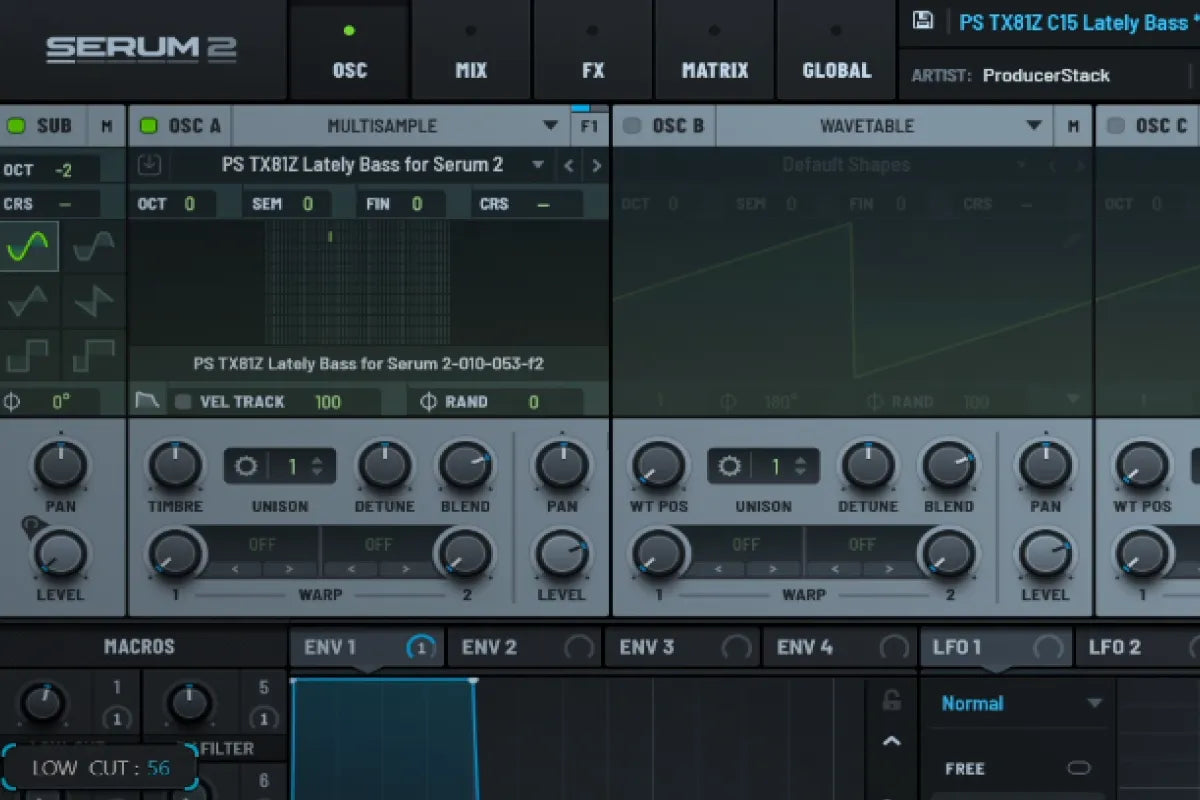
The approach we took with the E-mu Proteus 2000 collection demonstrates one particular methodology: capture authentic hardware through proper studio signal chains, we used vintage Neve 1073 preamps, which add that harmonic warmth and character, then integrate that captured sound into modern tools like Serum 2. This isn't about nostalgic recreation for its own sake; it's about accessing specific tonal qualities that worked in warehouse raves and still work in contemporary tech house.
Worth noting: Xfer Records' Serum 2 and other tools aren't affiliated with us, we're simply highlighting effective production approaches. These are tools many producers already use, and understanding how to leverage their capabilities matters regardless of where your sounds come from.
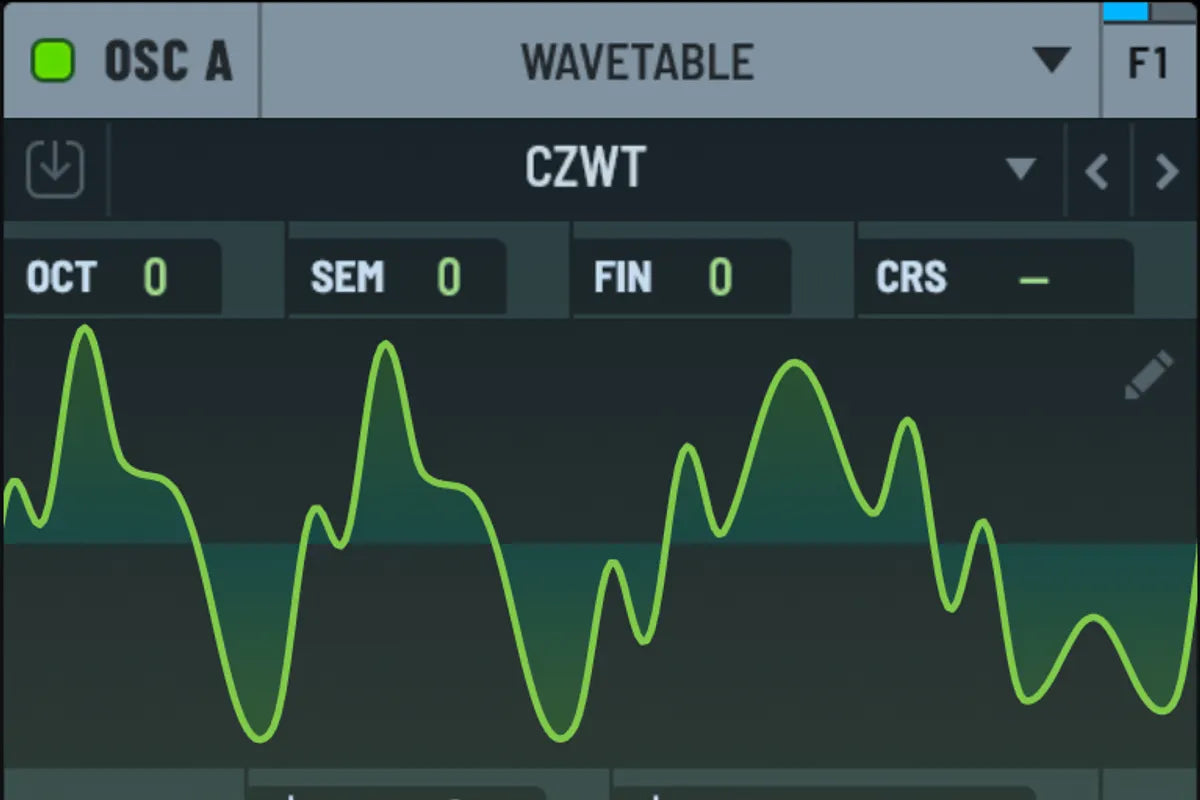
When you're building Serum presets or working with any wavetable synthesis, think about the original hardware methodology. Those Proteus stabs had limited sample playback with specific filter characteristics. You can recreate that character by choosing appropriate wavetables, shaping envelopes for quick attack/decay, and using filtering to get that clean but slightly aggressive digital snap.
The key distinction between just having stabs and having useful stabs is curation. Quantity means absolutely nothing if you spend twenty minutes auditioning sounds every time you need one. The Proteus 2000 succeeded because someone decided which 1,536 presets actually mattered. Apply the same filter to your own collection, ruthlessly edit down to sounds you'll actually use.
What Makes a Stab Work in 2026
Character matters more than perfection, I reckon. A stab with slight imperfections, maybe a bit of aliasing, some pitch instability, minor harmonic oddities, often sits better in a mix than something clinically perfect. That late-nineties digital harshness that seemed like a limitation at the time has become a desirable quality because it occupies a specific sonic territory that purely software-generated sounds struggle to replicate convincingly.
Context determines effectiveness more than any absolute quality metric. That aggressive brass stab that works perfectly in a tech house breakdown might sound absolutely ridiculous in a deep house track. The warm organ stab that fits understated minimal productions might completely disappear in a maximal peak-time banger. Build your stab collection with specific contexts in mind rather than chasing some theoretical "best" sounds.
Why Rave Stabs Remain Essential to House Music
Thirty-five years after house producers started building tracks around string stabs, they're still essential. The specific sounds change, fewer orchestral hits now, more synthesised chord blasts, but the function remains constant. Electronic music still needs rhythmic punctuation that carries harmonic information. Producers still need sounds that create tension, mark transitions, and deliver impact without permanently occupying mix space.
The UK rave era didn't invent stabs, but it demonstrated their versatility across increasingly aggressive tempos and increasingly complex arrangements. Those late-night warehouse parties where the Proteus 2000's organ stabs cut through thousand-watt sound systems? Same production principle as a perfectly placed stab in a contemporary tech house track playing through club monitors in Berlin, Los Angeles, or São Paulo. The cultural context shifts, but the production logic endures.
Understanding hits and stabs means understanding efficiency in electronic music production. These aren't decorative elements; they're functional components that solve specific arrangement challenges. When you need harmonic punctuation, rhythmic reinforcement, and mix clarity simultaneously, stabs deliver. That's why they mattered in '92, and that's why they still matter now.
If you want authentic late-nineties Proteus 2000 stab character processed through vintage Neve 1073 preamps and integrated into modern Serum 2 workflow, we've captured exactly that in the EMU Proteus 2000 Stabs n Hits collection. Twelve meticulously captured heritage patches with intelligent macro control, ready to drop into your productions. Not nostalgia for its own sake—practical tools with proven dancefloor effectiveness.